








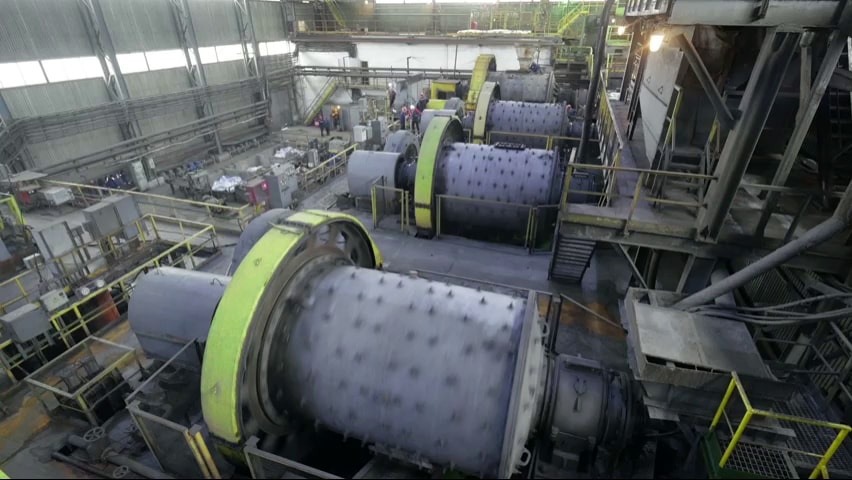
A rotary kiln is one of the most demanding pieces of equipment in a cement plant, and its girth gear plays a critical role in keeping the kiln turning reliably. The gear operates under heavy loads, relatively low rotational speeds, elevated temperatures, and persistent exposure to dust, making lubrication a key part of protecting the gear teeth and maintaining dependable operation.
Choosing a suitable kiln girth gear lubricant is only one part of the equation. Maintenance teams must also consider how the lubricant forms and maintains a protective film, how consistently it reaches the working surfaces, and whether the application method suits the equipment and operating conditions. Even a technically suitable lubricant can provide inadequate protection if coverage is uneven or the application system is not properly maintained.
This guide explains the challenges of rotary kiln girth gear lubrication, the properties to evaluate when selecting a lubricant, practical application and monitoring practices, and common problems that cement plant maintenance teams should address to protect their equipment.
Why Girth Gear Lubrication Matters in Rotary Kilns
The girth gear is a large ring gear mounted around the rotary kiln shell. It works with a pinion to transmit the drive torque required to rotate the kiln, allowing the process to continue under substantial mechanical and thermal demands. Because the gear teeth repeatedly enter and leave contact during operation, their surfaces need adequate protection against wear, scuffing, and other forms of contact damage.
protection against wear, scuffing, and other forms of contact damage.
Lubrication helps separate interacting metal surfaces with a protective film, reducing direct contact and managing friction at the tooth interface. The film must remain effective under the combination of load, speed, temperature, and surface movement present in the gear mesh. If the film becomes inadequate, local contact stresses can contribute to surface distress, accelerated wear, and damage that may require corrective maintenance.
The consequences extend beyond the gear itself. Girth gear or pinion damage can increase maintenance requirements, complicate alignment and inspection work, and contribute to unplanned kiln downtime. Since a kiln is central to cement production, interruptions can affect the wider manufacturing process.
A consistent lubrication practice therefore serves two purposes: protecting the gear mesh and helping maintenance teams identify developing problems before they become more serious. Lubricant selection, application control, inspection, and operating-condition monitoring should be treated as parts of the same maintenance strategy rather than separate activities.
The Operating Conditions That Make Kiln Gear Lubrication Difficult
Heavy Loads and Slow Speeds
Rotary kiln girth gears transmit substantial torque while operating at relatively low rotational speeds. This combination makes it important to evaluate whether the lubricant can maintain an adequate protective film under the actual loading conditions. At low speeds, a conventional fluid film may be difficult to sustain, particularly where tooth loads are high or operating conditions vary.
Lubricant viscosity, film-forming characteristics, and resistance to mechanical displacement all influence how well the working surfaces remain protected. However, selecting a product solely because it has a high viscosity or is described as a heavy-duty lubricant is not enough. The lubricant must be suitable for the gear design, the operating load, the application method, and the manufacturer’s recommendations.
Maintenance teams should also investigate changes in the load or contact pattern. Abnormal vibration, uneven tooth contact, misalignment, or changes in drive conditions can increase local stresses that lubrication alone cannot correct. A suitable lubricant is essential, but it cannot compensate for an underlying mechanical problem.
Temperature and Thermal Variation
Temperature affects lubricant viscosity, adhesion, and overall performance. A lubricant that behaves appropriately under one operating condition may respond differently when the gear surface becomes hotter or experiences repeated thermal changes. This is particularly relevant in cement plants, where the kiln’s thermal environment can influence the conditions around the drive and gear assembly.
The important consideration is the temperature experienced by the lubricant at the gear mesh, not simply the temperature inside the kiln. Girth gear operating temperatures depend on equipment design, heat transfer, shielding, ventilation, ambient conditions, and the location of the measurement.
Maintenance teams should therefore establish the actual operating temperature and compare it with the lubricant’s technical data. Where temperatures exceed the product’s intended operating range, the team should review lubricant suitability, application quantity, and possible external heat sources rather than assuming that more frequent application will resolve the issue.
Dust and Contamination
Cement plants generate fine dust that can settle on exposed machinery and enter gear lubrication systems. When dust combines with lubricant, it can contaminate the working surfaces and contribute to abrasive wear. Moisture, process debris, and other contaminants may create additional problems depending on the installation and environmental conditions.
The risk is not limited to the lubricant itself. Exposed reservoirs, damaged seals, poorly maintained spray equipment, and inadequate protection around the gear mesh can all provide routes for contamination. A lubricant that adheres well to the teeth still needs to be applied and stored in a way that preserves its cleanliness.
Regular inspection of the gear enclosure, lubrication equipment, spray nozzles, and lubricant condition can help identify contamination before it becomes a persistent issue. Where deposits are visible, maintenance teams should determine whether they are caused by excessive application, environmental contamination, or a change in lubricant behaviour before deciding on corrective action.
Gear Tooth Contact and Sliding
Girth gear lubrication must account for the way the gear teeth interact throughout each rotation. Tooth contact involves a combination of rolling and sliding, with the relative proportions changing across the contact zone. This movement, combined with high contact stresses, creates conditions in which the lubricant needs to resist displacement and protect the surfaces against wear.
The contact pattern is also influenced by gear geometry, alignment, tooth condition, and the distribution of load across the face width. If the gear mesh has uneven contact, a lubricant may not be able to prevent localised damage even when it is otherwise suitable for the application.
Inspection should therefore consider the condition and distribution of wear across the teeth rather than focusing only on whether lubricant is visible. Changes in wear patterns, scoring, surface distress, or abnormal contact marks may indicate that the team needs to investigate both lubrication performance and the mechanical condition of the drive.
What to Look for in a Kiln Girth Gear Lubricant
Selecting a kiln girth gear lubricant requires more than comparing product names or viscosity values. Maintenance teams should evaluate the lubricant against the gear’s operating conditions. When selecting a lubricant for your kiln girth gear, start with the operating temperature, load, gear design, and application system, the manufacturer’s requirements, and the lubrication system used at the plant. The following properties provide a practical starting point for that assessment.
Film Strength and Viscosity
Viscosity influences how a lubricant flows, spreads, and contributes to film formation under operating conditions. For heavily loaded, slow-moving open gears, the lubricant must provide suitable protection at the tooth interface while remaining compatible with the chosen application system.
Film strength and load-carrying performance are equally important considerations. A lubricant needs to withstand the demands of the gear mesh without allowing excessive direct contact between the teeth. Product selection should therefore account for the lubricant’s intended application and its documented performance characteristics, rather than relying on viscosity alone.
A higher-viscosity product is not automatically the better choice for every kiln. Excessive viscosity may affect pumpability, spray distribution, or coverage, particularly if the equipment and application system were designed for a different lubricant. Always compare the product’s technical data sheet with the gear manufacturer’s recommendations and actual operating conditions.
Adhesion and Coverage
A girth gear lubricant needs to reach the working surfaces and remain available to protect the teeth as they move through the mesh. Adhesion can help the lubricant resist being displaced by movement, gravity, and operating forces, but adhesion alone does not establish whether the product is suitable for the application.
Coverage is just as important. If lubricant reaches only part of the tooth surface, certain areas may receive inadequate protection even when the overall application quantity appears sufficient. Spray alignment, nozzle condition, delivery pressure, lubricant flow, and the gear’s movement can all influence distribution.
During inspections, maintenance teams should look for consistent coverage across the intended contact area and investigate persistent dry zones, excessive deposits, or uneven distribution. These observations can help distinguish an application problem from a lubricant selection issue.
Temperature Performance
The lubricant should be suitable for the temperatures encountered during normal operation, startup, and other relevant operating conditions. Temperature can affect viscosity, lubricant flow, adhesion, and the stability of the protective film, so the team should assess the expected operating range rather than selecting a product based on a single temperature reading.
Petron’s Gear Shield P is for mill and kiln open gear lubrication and is specified for elevated temperatures above 93°C (200°F). This is a product-specific reference point, not a universal selection threshold for all rotary kiln applications. The actual suitability of Gear Shield P, or any alternative, should be confirmed against the product’s current technical documentation and the equipment’s requirements.
Where the gear operates at unusually high temperatures, investigate the source of the heat and assess whether it reflects normal operating conditions, inadequate ventilation, abnormal friction, or another mechanical issue. Choosing a lubricant with suitable temperature performance is important, but an unexplained temperature increase should not be treated as a lubrication problem alone.
Application Compatibility
The lubricant must work with the lubrication equipment installed on the kiln. Depending on the system, the product may need to pass through spray nozzles, pumps, distribution lines, or other delivery components before reaching the gear teeth.
Compatibility considerations include viscosity at the relevant temperature, flow characteristics, the application system’s design, and the manufacturer’s recommendations. A product that performs well on the gear surface may still be unsuitable if it cannot be delivered consistently through the existing equipment.
Before changing lubricants, maintenance teams should confirm the application method, review the new product’s technical data, and follow the appropriate transition procedure. Mixing products without checking compatibility can also create uncertainty about performance and application behaviour.
Best Practices for Applying Kiln Gear Lubricant
Even a well-selected lubricant cannot deliver reliable protection if it is applied inconsistently. A disciplined application procedure helps maintenance teams maintain coverage, identify developing problems, and avoid unnecessary lubricant consumption.
1. Follow the equipment and lubricant manufacturer’s recommendations: Establish the specified application method, operating conditions, and lubrication requirements before setting the maintenance schedule. These recommendations should take precedence over generic rules because kiln designs, gear dimensions, operating loads, and lubrication systems differ.
2. Check the application equipment before changing the lubricant supply: Inspect pumps, lines, spray nozzles, filters where fitted, and other relevant components for blockage, leakage, wear, or incorrect positioning. A delivery problem can create uneven coverage that might otherwise be mistaken for a lubricant performance issue.
3. Apply lubricant to the intended working surfaces: Confirm that the spray pattern reaches the required tooth surfaces and that the delivery system distributes the lubricant consistently. Follow the system manufacturer’s instructions regarding whether application should occur during operation or under a specified maintenance condition, and use the required guarding and isolation procedures.
4. Establish a repeatable application schedule: Frequency should be determined by the lubricant manufacturer’s guidance, gear operating conditions, application system, and the plant’s inspection findings. Automatic lubrication systems should be checked to confirm that their programmed settings, delivery rates, and operating signals correspond with the intended lubrication practice.
5. Avoid treating excessive application as additional protection: Applying more lubricant than necessary can increase consumption, create deposits, attract contamination, and obscure the condition of the gear teeth. If coverage appears inadequate, investigate nozzle alignment, delivery performance, operating conditions, and product suitability before increasing the quantity.
6. Record application and inspection findings: Document the product used, application settings, observed coverage, operating temperatures where available, and any changes in tooth condition. Consistent records make it easier to identify recurring problems and evaluate whether a corrective action has improved performance.
These practices should be incorporated into the plant’s preventive maintenance programme. They are most effective when lubrication personnel, mechanical maintenance teams, and operations staff work from a shared understanding of the equipment’s requirements.
Common Kiln Gear Lubrication Problems
Lubrication-related problems can develop gradually, and several symptoms may have more than one possible cause. Maintenance teams should avoid diagnosing a failure from appearance alone and instead combine visual inspection with operating data and mechanical checks.
| Observed problem | Possible causes | Recommended checks |
|---|---|---|
| Uneven lubricant coverage | Blocked or misaligned nozzles, inconsistent delivery, unsuitable application settings | Inspect spray patterns, delivery equipment, and application settings |
| Excessive lubricant deposits | Overapplication, poor distribution, contamination, or unsuitable application conditions | Review application quantity, product data, and deposit characteristics |
| Scoring or visible tooth damage | Inadequate film protection, contamination, excessive contact stress, or alignment issues | Inspect tooth surfaces, contact patterns, alignment, and lubricant delivery |
| Unusual temperature increase | Increased friction, abnormal loading, alignment issues, or changes in lubrication | Compare temperature readings with historical data and investigate mechanical causes |
| Accelerated or uneven wear | Contamination, insufficient protection, uneven load distribution, or deteriorating gear condition | Examine wear patterns, lubricant condition, operating history, and gear geometry |
The key is to distinguish the symptom from its underlying cause. For example, dry areas on the gear teeth may indicate poor lubricant delivery rather than an unsuitable lubricant formulation. Similarly, visible scoring may be associated with inadequate lubrication, but alignment, gear geometry, surface condition, and operating loads also need to be assessed.
When damage is suspected, follow the equipment manufacturer’s inspection procedures and obtain specialist support where necessary. Continuing operation without understanding the severity and cause of a developing gear problem can increase the risk of more extensive damage.
How Maintenance Teams Can Monitor Gear Lubrication
A reliable rotary kiln lubrication programme depends on regular observation, documented inspections, and timely investigation of changes. Rather than waiting for visible damage, maintenance teams should establish a baseline for normal gear operation and use it to identify developing problems.
Inspect the Gear Teeth and Lubricant Distribution
Routine inspections should assess the condition of the tooth surfaces, the consistency of lubricant coverage, and any unusual deposits or contamination. Where inspection reveals dry areas, uneven wear, or changes in surface appearance, record the affected locations and compare them with previous observations.
The inspection process should follow the equipment manufacturer’s safety requirements, including appropriate isolation and guarding procedures. Personnel should never approach exposed moving gear components to obtain a closer look while the equipment is running.
Track Temperature, Vibration, and Operating Changes
Temperature trends can help identify changes in friction or operating conditions, particularly when measurements are taken consistently at comparable locations and under similar loads. Vibration data, drive performance, and other available condition-monitoring measurements can provide additional context when a gear problem is suspected.
No single measurement should be treated as a definitive diagnosis. A temperature increase, for example, could reflect a change in operating load, alignment, ventilation, or lubrication. Comparing several indicators with historical records gives maintenance teams a stronger basis for deciding what to investigate.
Review the Lubrication Schedule Regularly
The appropriate lubrication frequency depends on the equipment design, lubricant specifications, application system, and operating conditions. A fixed schedule provides consistency, but it should not prevent the maintenance team from investigating recurring coverage problems or changes in the gear’s condition.
Record lubricant consumption, application settings, inspection findings, and corrective actions. If the team repeatedly needs to increase application quantities or clear blocked nozzles, investigate the underlying cause instead of accepting the additional maintenance effort as normal.
Over time, these records help establish whether the lubrication programme is delivering consistent protection and where adjustments may be justified.
Petron Lubrication Solutions for Mills and Kilns
Selecting a lubricant for a rotary kiln girth gear starts with understanding the operating conditions and matching them to a product designed for the application. At Petron, we offer Gear Shield lubricants for mill and kiln open gear applications, with product selection guided by the operating conditions and application requirements.
The available products are:
- Gear Shield NC: Part of Petron’s range for mill and kiln open gear lubrication. Confirm the current product data sheet for its specific characteristics and application requirements.
- Gear Shield NCW: Another option in the Gear Shield range for mill and kiln open gears. Review its documented properties against the installation’s operating conditions before selection.
- Gear Shield Synthetic: A synthetic option listed for mill and kiln open gear lubrication. Product-specific performance and suitability should be verified using the current technical documentation.
- Gear Shield P: Specified by Petron for elevated-temperature mill and kiln open gear applications above 93°C (200°F). Confirm the relevant temperature measurement and product recommendations before selecting it.
- Kiln Lube 300: A synthetic, high-viscosity open gear lubricant intended for mills and kilns. Its suitability should be assessed against the gear’s requirements and the application’s lubrication system.
These products should not be treated as interchangeable simply because they are listed for similar applications. The correct choice depends on operating temperature, load, gear design, application method, and the technical requirements of the installation.
Before making a selection, maintenance teams can review the relevant product data sheets, Petron’s cement industry information, and its Products by Application resources. Petron’s Proof of Performance material and EHD Film Thickness Analysis resources may also be useful when evaluating application-specific lubrication questions, provided the available documentation supports the intended assessment.
Not sure which lubricant is right for your kiln? Talk to our technical team to discuss your equipment, operating conditions, and lubrication requirements. We’ll help you evaluate your application and find the best solution.
Frequently Asked Questions
1. What lubricant is used for rotary kiln girth gears?
Rotary kiln girth gears use specialised open gear lubricants formulated for demanding operating conditions, including heavy loads, low rotational speeds, and exposure to dust. The appropriate product depends on the gear design, operating temperature, application system, and equipment manufacturer’s recommendations. Petron lists Gear Shield NC, NCW, Synthetic and P, as well as Kiln Lube 300, for relevant mill and kiln open gear applications.
2. How do you lubricate a kiln girth gear?
Kiln girth gears are lubricated using an application method suitable for the equipment, commonly a purpose-designed spray lubrication system where fitted. The system must deliver lubricant consistently to the intended tooth surfaces, with application quantity and frequency determined by the manufacturer’s instructions and operating conditions. Regular checks of spray distribution, nozzle condition, lubricant coverage, and tooth wear help maintain an effective lubrication programme.
3. What are the best practices for kiln gear lubrication?
Best practices include selecting a lubricant suitable for the operating conditions, following the equipment manufacturer’s application requirements, maintaining clean and functional delivery equipment, and checking coverage regularly. Maintenance teams should also track operating temperature, inspect gear teeth for wear or damage, and document lubrication activities. Investigating recurring problems is more effective than simply increasing lubricant consumption.
4. What causes rotary kiln gear wear?
Rotary kiln gear wear can result from inadequate lubrication, contamination by abrasive dust, excessive contact stress, misalignment, uneven load distribution, and deterioration of the tooth surfaces. Several factors may contribute simultaneously, so visible wear should be assessed alongside lubricant coverage, operating conditions, gear alignment, and maintenance history. The appropriate corrective action depends on the underlying cause.
5. How often should kiln girth gears be lubricated?
There is no single lubrication interval suitable for every rotary kiln. The frequency depends on the lubricant specification, gear design, operating conditions, and the type of application system installed. Maintenance teams should follow the manufacturer’s recommendations and verify that the system delivers the intended quantity consistently. Inspection findings and changes in gear condition can indicate when the lubrication programme needs further investigation.
Protect Your Kiln Girth Gear with the Right Lubrication Practice
Reliable rotary kiln girth gear lubrication requires more than choosing a heavy-duty lubricant. It depends on matching the product to the equipment, delivering it consistently to the working surfaces, controlling contamination, and monitoring changes in gear condition throughout operation.
For cement plant maintenance teams, a structured lubrication programme can help identify developing problems earlier, reduce avoidable maintenance issues, and support more dependable equipment operation. When lubricant selection or recurring gear wear becomes a concern, reviewing the operating conditions and application system together provides a stronger starting point than changing products without a clear diagnosis.
Not sure which lubricant fits your kiln? Talk to Petron’s technical team to discuss your application and identify a suitable lubrication solution.